
Freedom Born: 1863
Examining views on Slavery and the Birth of the Emancipation Proclamation

In an 1863 Pamphlet, John Henry Hopkins, a Irish born composer and clergyman, rang in the new year by investigating the Bible’s view on slavery. He wrote that the word slave only appears twice in the English version of the Good Book, however, “bondmen” and “bondmaid” appear multiple times, and it is understood that those titles denoted indentured servitude, slavery by another term. However, he notes, while slavery is a physical evil, “this does not satisfy the judgment of its more zealous adversaries, since they contend that it is a moral evil—a positive sin to hold a human being in bondage, under any circumstances whatever, unless as a punishment inflicted on crimes, for the safety of the community.” Yet, Hopkins admits that, “If it were a matter to be determined by my personal sympathies, tastes, or feelings,I should be as ready as any man to condemn the institution of slavery, for all my prejudices of education, habit, and social position stand entirely opposed to it,” but he is a 19th century Christian, and as he believes, he cannot be too quick to jump to the support of his other faculties that may undermine the one “infallible law” of God’s word. Hopkins belief may not have been one that was wildly popular among contemporary Northern Christians, but was observed as being employed and used across the South during and long before the Civil War and into the post war years with the Lost Cause— it would be a stretch to apply this to the modern era.
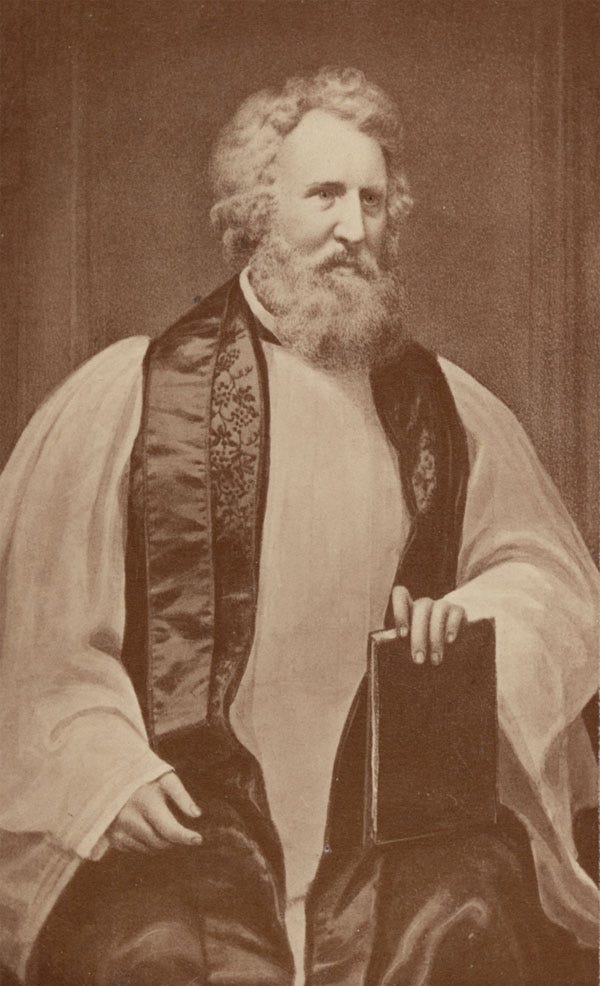
Hopkins begins to outline numerous stories from the Bible that he believes is evidence for the justification of slave owning. An Egyptian slave called Hagar owned by Sarah, wife of Abraham, runs away and is commanded by God “to return to her mistress and submit herself”, here quoting the book directly. Hopkins says that if only the “philanthropists of our age,who profess to believe the Bible, had been willing to take the counsel of that angel for their guide, it would have preserved the peace and welfare of the Union.” The American Civil War had just seen two of its bloodiest battles yet by this point in the conflict. Just the month prior to this pamphlet’s publication, the Union Army failed to break the Confederate defenses at Fredericksburg in Virginia. In September that previous year, the Confederates raided northwards into Maryland –Confederate cavalry even went into Pennsylvania– and the great armies of the Potomac and Northern Virginia did battle near Sharpsburg, Maryland, resulting in the single bloodiest day of combat in American history. Yet, Hopkins points the finger at the morality of anti-slavery philanthropists for starting this war leading to such violence
Moral questions do not matter to Hopkins, as he states, Christians should follow, first and foremost, the “law” of God laid out in the Bible. This law does not offer leniency to the personal feelings of its followers about something, as Hopkins argued, that is justifiable under its codes. He cites again the Bible “‘Thou shalt not covet thy neighbor's house, thou shalt not covet thy neighbor's wife, nor his man-servant, nor his maid-servant, nor his ox, nor his ass, nor any thing that is thy neighbor's.” (Exod. 20:17.)’ Here it is evident that the principle of property— ‘any thing that is thy neighbor’s’--runs through the whole.” Just as the wife is the property of the husband, Hopkins writes, along with his cattle and house and so on, so too is the slave, and it would be a sin to covet that property, or wish to relinquish it from him. Jesus, he argues, never once alluded to the condition, ownership, or liberation of the slave. “How prosperous and united would our glorious republic be at this hour, if the eloquent and pertinacious declaimers against slavery had been willing to follow their Saviour's example!” Slavery to Hopkins is a necessity of both American law, and religious law, and “I utterly discard [those] famous propositions of the Declaration of Independence” here referring to the idea that “all men are created equal that they are endowed by their Creator with certain unalienable Rights, that among these are Life, Liberty and the pursuit of Happiness.” He discards them so because they are too popular, and too far removed from divine piety. Hopkins was living in New York at the time he wrote this, one of three states that provided the most soldiers to the war; over 400,000 men from New York would take up arms for the Union.
Hopkins’ writing was in superb contrast to the larger political moment occuring in the Union during this period. While the primary goal of President Abraham Lincoln was to, at the start of the war, preserve the American Union, by 1862 the goalposts shifted. Of course, preservation of the Union was key, but no better an opportunity than a war fought over the right to own enslaved persons to drive abolition into effect. Lincoln himself decried slavery, and among his chief priorities was the liberation of the enslaved. In a famous quote from a letter the President penned to Horace Greely in August, 1862, Lincoln says:
As to the policy ‘I seem to be pursuing,’ as you say, I have not meant to leave anyone in doubt. I would save the Union. I would save it the shortest way under the Constitution. The sooner the national authority can be restored, the nearer the Union will be ‘the Union as it was.’ If there be those who would not save the Union unless they could at the same time save slavery, I would not agree. If there would be those who would not save the Union unless they could at the same time destroy slavery, I would not agree. My paramount object in this struggle is to save the Union, and is not either to save or to destroy slavery. If I could save the Union without freeing any slave I would do it, and if I could save it by freeing all the slaves I would do it; and if I could save it by freeing some and leaving others alone I would also do that. What I do about slavery, and the colored race, I do because I believe it helps to save the Union; and what I forbear, I forbear because I do not believe it would help to save the Union. I shall do less whenever I shall believe what I am doing hurts the cause, and I shall do more whenever I shall believe doing more will help the cause.
Many of Lincoln’s critics point often to this quote, making it seem as though Lincoln never once truly cared to free the slaves, it was purely political. However, in the summer months before he had even written this letter, Lincoln had penned the draft of the emancipation proclamation. July of 1862 saw this document in its earliest stage, hand written by Lincoln himself. The draft reads:
...it is my purpose, upon the next meeting of Congress, to again recommend the adoption of a practical measure for tendering pecuniary aid to the free choice or rejection, of any and all States which may then be recognizing and practically sustaining the authority of the United States, and which may then have voluntarily adopted, or thereafter may voluntarily adopt, gradual abolishment of slavery within such State or States — that the object is to practically restore, thenceforward to be maintained, the constitutional relation between the general government, and each, and all the states, wherein that relation is now suspended, or disturbed; and that, for this object, the war, as it has been, will be, prosecuted. And, as a fit and necessary military measure for effecting this object, I, as Commander-in-Chief of the Army and Navy of the United States, do order and declare that on the first day of January in the year of our Lord one thousand, eight hundred and sixtythree, all persons held as slaves within any state or states, wherein the constitutional authority of the United States shall not then be practically recognized, submitted to, and maintained, shall then, thenceforward, and forever, be free.
Lincoln was, of course, wholly opposed to slavery. It violated every ideal that America was supposed to be the representative of. It was in complete juxtaposition to the Declaration of Independence. What gave America life, the document which severed the colonial tie of Britain’s rule, was being flagrantly violated daily in the United States. Slavery had sickened Lincoln to his core. He considered this peculiar institution as a moral outrage which thus deprived America’s “republican example of its just influence in the world–enables the enemies of free institutions, with plausibility, to taunt us as hypocrites.” Historian Eric Foner explained that Lincoln had, in his political endeavors and personal belief, been anti-slavery and the “By 1860 he had become one of the North’s major political leaders, part of a generation that included [Stephan A.] Douglas and William H. Seward, men, like Lincoln, who built their careers on the basis not of the economic issues of the Jacksonian era but their positions regarding slavery.”1 To paraphrase Foner, Lincoln spoke openly and freely and often about working towards the institution's “ultimate extinction.”
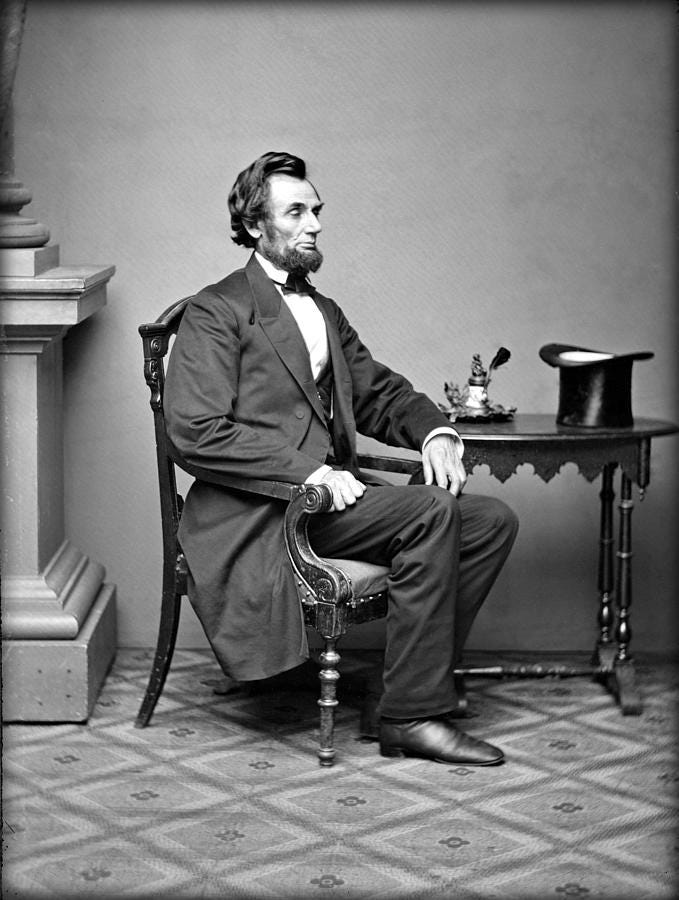
It can be seen that Abraham Lincoln and John H. Hopkins were on opposite ends of a spectrum. Both Hopkins and Lincoln found the idea of enslavement, and continued slavery in America as an evil, however, Hopkins did not view it as a moral evil worthy of abolishing. Lincoln on the other hand, viewed slavery with fierce indignation, it was a moral abhorrence, and to do nothing about it, to let it continue in the supposedly republican and free United States, was equivalently abhorrent. Yet, it was not an issue commensurate to the public’s larger concern: the war at hand. While yes, abolitionists had long been seeking the opportunity to see their goal’s end, the greater public had other things on their mind.
Still, the political moment to achieve this goal had arrived. The later months of 1862 only cemented abolition as a tenet of the Union. In September of 1862, governors across the north met, at the behest and call of Pennsylvania’s governor Andrew Curtain, to discuss their support of the proclamation and Lincoln’s administration—this in part to address a fear held by Lincoln that the border states of the Union which still practiced slavery may, upon the release of the proclamation, secede and join the Confederacy. The wartime governors of the north met in the booming railroad city of Altoona, Pennsylvania at the Logan House Hotel near the rail tracks. The Battle of Antietam’s favorable outcome for the Union provided Lincoln the military momentum he needed for the release of the proclamation, and now, the political power was to be answered for. The governors discussed many things at the meeting, even taking time for a visit to the nearby Horseshoe Curve the day prior, but chief among the many topics–including the potential removal of George B. McClellan– was the proclamation. Of the thirteen governors present, only one voted no. Augustus Bradford of Maryland. However, this was enough for Lincoln.
On January 1st, 1863, the Emancipation Proclamation was released. Joseph E. Stevens tells a story that it had been well late into the night when Lincoln signed the final copy of the Proclamation to be released, and that the President said “I never, in my life, felt more certain that I was doing right than I do in signing this paper,” but fretted that “I have been shaking hands since nine o’clock this morning ‘til my arm is stiff and numb. Now this signature is one that will be closely examined, and if they find my hand trembled they will say, ‘He had some compunctions.’ But anyway, it is going to be done.”
And done it was.
With the release of the Emancipation Proclamation, the Civil War’s public purpose was ultimately shifted. While the long road to secession and violence invariably revolves around the issue of slavery, the war had, up to 1863, been one of proclaimed independence for the south, and preservation for the north. Now, the message was clear. The issue central to this great eruption of hostility and warfare was, without doubt, about slavery. It was not about taxes or tariffs, or state sovereignty, but that the southern states despised the notion of a radical republican like Lincoln becoming the president, and threatening southerners perceived right to own and enslave humans. The “states rights” or “sovereignty” in question dealt nothing with governance, and everything with the “right” to own slaves. The south had no legitimate claim to ownership of these people any longer, and Lincoln sought to finish this war for the purpose of their liberation.
Perhaps the proclamation itself is not the place to most easily discern Lincoln’s beliefs, but rather the Gettysburg Address. Delivered on November 19th, 1863 at the site where thousands of Union soldiers were buried, dead of the Battle of Gettysburg (July 1-3, 1863).
Four score and seven years ago our fathers brought forth on this continent a new nation, conceived in liberty, and dedicated to the proposition that all men are created equal. “Now we are engaged in a great civil war, testing whether that nation, or any nation so conceived and so dedicated, can long endure. We are met on a great battlefield of that war. We have come to dedicate a portion of that field as a final resting place for those who here gave their lives that that nation might live. It is altogether fitting and proper that we should do this. “But in a larger sense we cannot dedicate, we cannot consecrate, we cannot hallow this ground. The brave men, living and dead, who struggled here have consecrated it, far above our poor power to add or detract. The world will little note, nor long remember, what we say here, but it can never forget what they did here.
In the last portion of the speech, Lincoln’s call to action, is most prominent and powerful.
It is for us the living, rather, to be dedicated here to the unfinished work which they who fought here have thus far so nobly advanced. It is rather for us to be here dedicated to the great task remaining before us, that from these honored dead we take increased devotion to that cause for which they gave the last full measure of devotion, that we here highly resolve that these dead shall not have died in vain, that this nation, under God, shall have a new birth of freedom, and that government of the people, by the people, for the people, shall not perish from the earth.
Here is that shift embodied. It is for the living to look upon these dead and finish their work— the work of liberation and union— and finish it. We must fight until the job is done. Until every man, woman, and child forced into bondage is freed, and every rebelling state is brought back into the Union.
When the war ended in 1865, over 600,000 casualties were incurred, but as a result, over 4,000,000 enslaved people were freed, especially with the passage of the 13th Amendment. And with the war 158 years behind us, where have we ended up? It does not take a scholar to see the work is yet unfinished, “rot still lingers” as a former professor of mine once said. Now, we must ask ourselves, will we fight until the work is done?
Eric Foner, The Fiery Trial: Abraham Lincoln and American Slavery (New York: W. W. Norton & Company, 2011) 64
Although not at all the primary focus, but an initial one, I wanted to make comment on the suggestion around Christianity as a (among other things, it would seem) a slavery-apologist doctrine. I could just be reading into the following too much: “but [Hopkins] is a Christian, and as such he cannot be too quick to jump to the support of his other faculties that may undermine the one ‘infallible law’ of God’s word”. This line, which may just be tongue and cheek, felt particularly uncharitable and even hurtful. I’ll grant, here and there a “he” + verb is sprinkled in for Hopkins professing his various biblical interpretations, but I kept waiting for this to be explicitly stated as *not*, to reiterate: “the one infallible law of God’s word”. Yes, historically there were slaves and these are mentioned in the Bible as Hopkins points out, but I would encourage anyone to read as well as reference the overwhelming interpretations of stories such as Hagard’s (the Egyptian handmaiden). You will find it to be, like many things of the Bible, a nuanced story. Hagard, a pregnant woman, told not to wander unprotected into the violent and dangerous desert where she would have been resold or likely much worse, and lastly, not to mention God’s promise to Hagard. This same story, ironically, found in Exodus, which in large part details God delivering the Jews ... out of slavery in Egypt. In fact, there’s a whole theological perspective called ‘liberation theology’ one could look into.
I’ll leave off in saying, every Christian is no stranger to those cherry pick lines, justifying their interpretations, without understanding the full scope of the Bible, which, unfortunately it would seem for some, does not end with the Old Testament. And again, maybe all I was looking for was a small nod to the bevy of abolitionists, radical and those less so, who identified with sects or ideas of Christianity. I was left thinking but for Lincoln’s staunch moral stance of America’s founding documents and statehood those backward Christian ‘thinker(s)’ of the Union, clinging to slavery, did not triumph. If nothing else, I found it a cautionary tale to any professed Christian on Hopkins. That being, taking a myopic view of the Word to justify an abhorrence. I would ask Hopkins what God’s response was to Cain in asking “Am I my brother’s keeper?”